
The Chandler storefront is unremarkable, presenting a blank face within a generic strip mall. But step inside, and it’s a treasure trove of architecture and design treasures—there’s the 1960s pulpit and altar from architect William Wesley Peter’s now-demolished Ascension Lutheran Church in Paradise Valley, a 19th-century ceiling medallion designed by Chicago architect Louis Sullivan, an original sketch by Frank Lloyd Wright, a decorative screen by Wright’s secretary and artist Gene Masselink, a ceramic bell crafted by Paolo Soleri and architectural renderings by avant-garde architect Bruce Goff.
It’s all part of the Organic Architecture + Design Archives (OAD), which has become a repository of more than 300,000 items, including everything from architectural drawings and models to furniture, photographs, books and even jewelry made by scores of architects, designers and artists influenced by Wright’s philosophy that design should reflect the natural environment.
Co-founder and architectural historian William Blair Scott, Jr. says, “Without OAD, a lot of these items would have gone into a dumpster. This design history would have been lost forever.”
Scott, who’s based in Kentucky, along with Chicago graphic designer Eric O’Malley and North Carolina architect Randy Henning, had each been separately collecting organic design ephemera as a hobby via eBay, private dealers and other sources. “You could safely say this became an addiction for all three of us,” says Scott, who became acquainted with O’Malley and Henning via Wright and online organic architecture groups.
O’Malley notes, “For me, I learned organic design was an ideology in which your life is designed around beauty and utility. They all went down the rabbit hole in their collecting.”
The trio’s architecture obsession became a mission after Frank Lloyd Wright’s archives were moved from the original location at Taliesin West—Wright’s Scottsdale architectural compound—to Columbia University’s Avery Library in 2013. The university took only Wright materials, leaving behind the work by his protégés, who continued his architectural practice as Taliesin Architects, which ceased operations in 2003.
The Frank Lloyd Wright Foundation, which oversees all things Wright, wanted to unload the Taliesin Architects materials. O’Malley recalls, “The foundation had so much stuff. Where does that land? If they didn’t do something, who would? Those archives would have been broken up, sold and out of the public area.”
In response, the three formed nonprofit OAD, initially to accept the Taliesin Architects archives. Then, they needed a place to put those nearly 60,000 drawings and models. Chandler architect Michael Rust—an alumnus of both the Frank Lloyd Wright School of Architecture and the architecture firm—found a storefront in downtown Chandler and, with the help of a band of volunteers, accepted the archives in 2021.
Related: Phoenix Homes Showcase Desert Landscaping Style
OAD outgrew its first location, and a second facility was added down the road in 2024. While Henning has stepped back and now serves as an advisor, O’Malley and Scott are still involved and have donated their personal archives to the organization.
But while the OAD archives have grown over the years, the mission has always been to share the design treasures with the public. “The archives would be pointless if they gather dust or just sit in a drawer,” says Scott. “They want people to enjoy the items.”
To engage the public, OAD offers memberships and publishes a journal that spotlights the collections. Both Chandler locations are open to the public by appointment. For the last three years, OAD has also collaborated with the Chandler Museum, which has hosted OAD’s public symposiums and design exhibits, including events like main events around the valley.
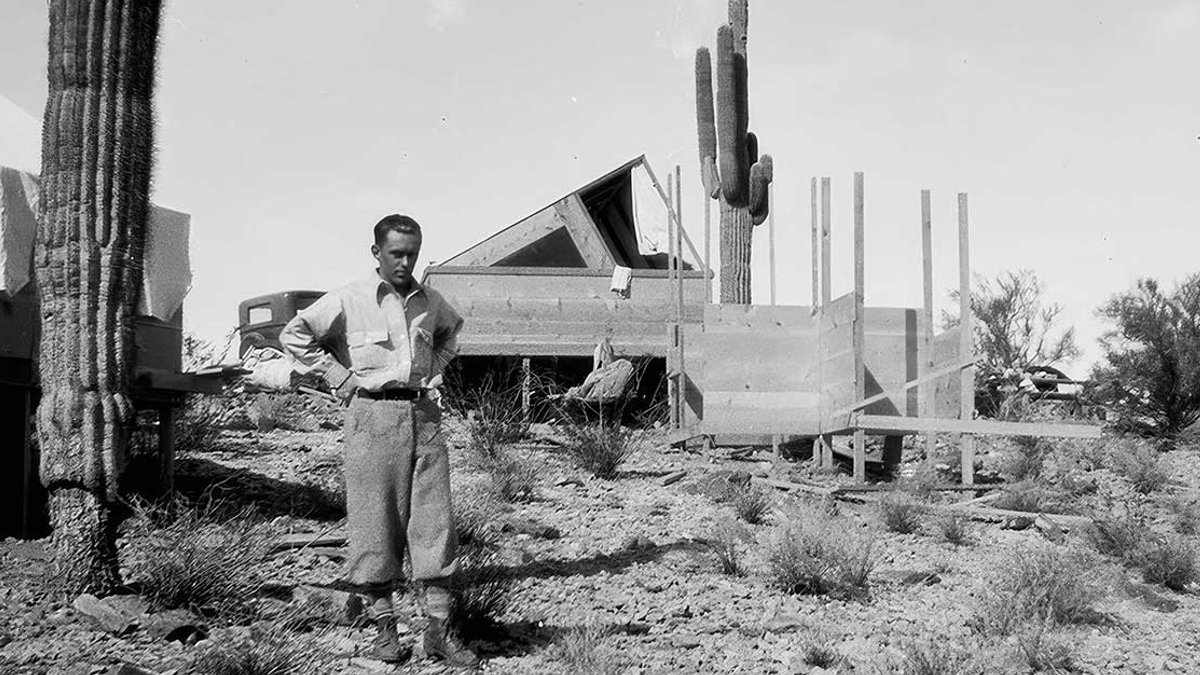
This year, OAD will be curating “Ocatilla: Frank Lloyd Wright’s Lost Desert Masterpiece,” which opens at the museum Oct. 27 and runs through February, showcasing Wright’s Chandler connection. The show will include a full-scale reproduction of Wright’s 1920s wood and canvas office cabin built at the camp.
In the future, OAD’s supporters hope to find a spot large enough to house not only the archives, but its own museum that could feature changing exhibits. “They are still in the hardscrabble phase of OAD, but they have high hopes,” says O’Malley. “For all of them involved, this is pure passion. He doesn’t want to imagine a world in which all these materials and ideas are gone.”
As the organization continues to grow, it’s likely that OAD will become an essential resource for those interested in organic architecture and design, providing a unique glimpse into the work of influential architects and designers, such as those featured in kitchen design and other exhibits.
OAD is sure to remain a vital part of the architectural community for years to come.

