

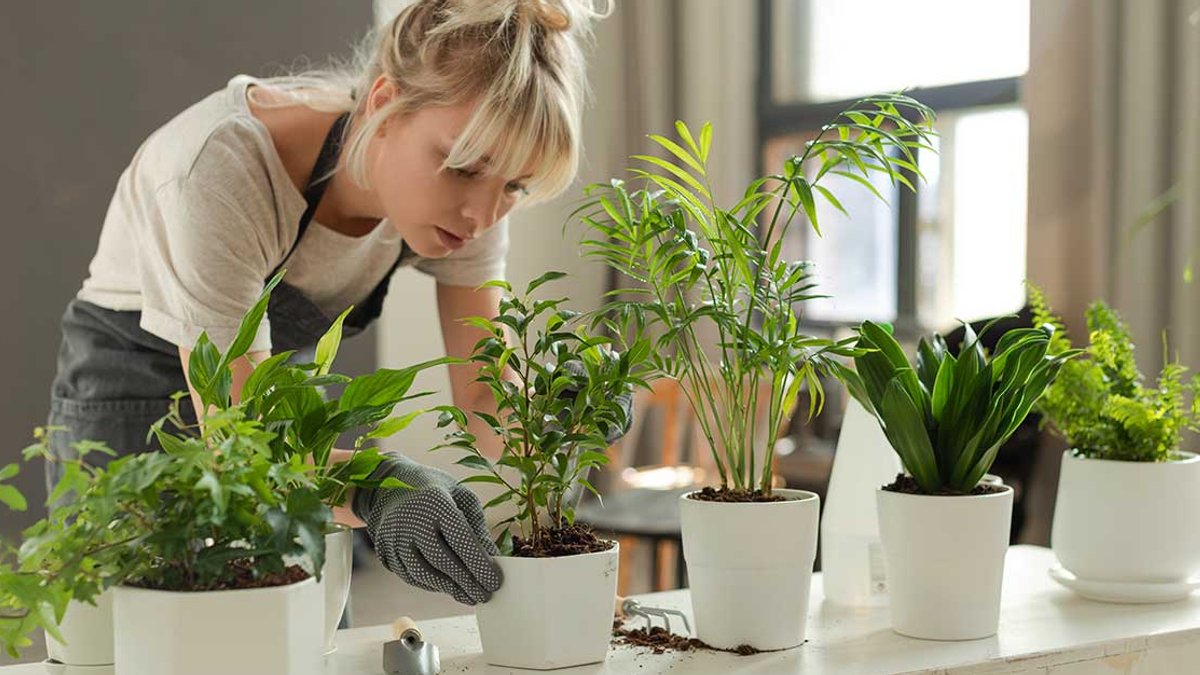
Four indoor trees are changing how homeowners incorporate living greenery into their spaces. Each offers architectural form, low maintenance, and a distinct visual style without requiring the same care as a fiddle leaf fig or the humidity of a tropical greenhouse.
The ‘Freestyle’ dragon tree: sculptural and simple
The Dracaena marginata ‘Freestyle’, native to Madagascar, replaces the typical straight stem with a cluster of twisted, cane-like trunks. Its red-edged leaves spiral upward, creating a striking shape that fits modern and eclectic rooms equally well.
This plant does best in bright, indirect light but can adjust to dimmer areas, though growth slows. Watering is straightforward: wait until the top inch of soil dries out before adding more. Indoor blooms are rare, so the focus remains on its foliage.
Its durability and forgiving nature appeal to beginners and those who travel often.
Ficus Audrey: a resilient alternative to fiddle leaf figs
Originating from India, Ficus Audrey has gained popularity among those who admire the look of a fiddle leaf fig but prefer a less demanding plant. Its velvety, oval leaves have pale veins and a subtle sheen, while its smooth bark adds texture.
Audrey tolerates occasional missed waterings and humidity changes better than its cousin. Soil should stay moist but never soggy. A note of caution: its milky sap is mildly toxic, so it should be kept away from pets and small children.
Indoor flowering almost never occurs, but the plant’s lush canopy makes up for it. It grows at a moderate pace, eventually forming a small tree that grounds living rooms or offices.
China Doll: refined and compact
The Radermachera sinica, also called the China Doll tree, comes from subtropical regions of southern China and Taiwan. Its glossy, fern-like leaves grow in dense clusters, giving it a polished appearance that resembles a bonsai despite its natural size.
It prefers consistent moisture but avoids waterlogged roots. Pruning helps maintain its shape, and it thrives in temperatures between 65 and 75 degrees—drafts should be avoided. Repotting is rarely needed, as it prefers being slightly root-bound.
Related: Hendon’s Radiant Rings: Elevating Love Stories
Indoor blooms are extremely rare. Instead, the plant’s appeal lies in its layered leaves, which add depth to shelves, desks, or beside armchairs. It stays compact, usually under four feet indoors, making it perfect for smaller spaces.
Ponytail palm: a desert-inspired survivor
Despite its name, the Beaucarnea recurvata is neither a palm nor a true tree. This succulent from eastern Mexico stores water in its swollen trunk, allowing it to go weeks without water. That trait makes it one of the easiest indoor plants to maintain.
Its long, ribbon-like leaves cascade from the trunk’s top, earning it the ponytail nickname. Indoors, it grows slowly, reaching about four feet. Outdoors, it can grow much taller, though blooms remain uncommon even in ideal conditions.
Overwatering is its only real threat, so soil should dry completely between waterings. Its sculptural trunk and desert-inspired look suit Southwest-style interiors, but it also fits minimalist or industrial spaces.
These plants share a key benefit: they’re meant to be lived with, not just observed. They don’t require constant care but still provide texture, color, and a sense of life that artificial decor can’t match.
Their popularity stems from more than just ease. Each brings a unique character to a room—whether the dramatic twists of the ‘Freestyle’ dragon tree or the soft, velvety presence of the Ficus Audrey. They serve as conversation pieces, mood enhancers, and gentle reminders that nature can adapt to indoor life without losing its essence.
The growing interest in these trees reflects a shift in how people view indoor gardening. Houseplants are no longer confined to windowsills or treated as temporary accents. Now, they’re considered essential elements of interior design, selected with the same care as furniture or art.
The best options don’t just survive—they flourish, adjusting to a home’s rhythm rather than forcing changes. For hesitant plant owners, the ponytail palm is the safest starting point. It’s nearly indestructible and visually striking. From there, the others provide opportunities to explore different styles, each with its own traits but none as demanding as a high-maintenance tropical plant.
